Pantry pest outbreaks in Buffalo properties often concentrate inside historic construction with extensive built-in cabinetry, such as wood pantries in Elmwood Village and Allentown duplexes or lath-and-plaster kitchen…
Pantry pest outbreaks in Buffalo properties often concentrate inside historic construction with extensive built-in cabinetry, such as wood pantries in Elmwood Village and Allentown duplexes or lath-and-plaster kitchen walls in North Park and Black Rock. Unlike casual moisture pests, stored product insects such as Plodia interpunctella (Indian meal moth) and Oryzaephilus surinamensis (sawtoothed grain beetle) reproduce directly inside unsealed grains, spices, seeds, and dried pet food. A localized population can produce hundreds of larvae within 30 days, migrating out of cabinets into ceiling junctions, baseboards, and wall voids. Surface spraying from retail canisters fails because larvae shelter inside corrugated cardboard packaging, drawer tracks, and structural micro-cracks where topical aerosols cannot penetrate.
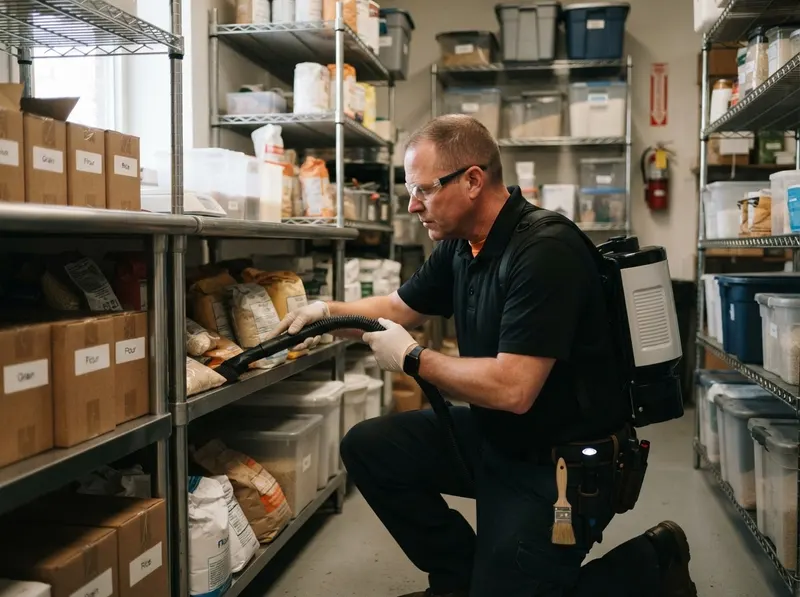
Guardian Pest Solutions uses a root-cause biological approach designed for homes and rental flats in Parkside, Kaisertown, and South Buffalo. The process begins with a manual mechanical audit of all stored dry goods to locate the primary breeding epicenter, isolating contaminated materials from viable reserves. High-efficiency particulate air (HEPA) vacuuming extracts active larvae, pupae, and webbing from shelving joints and behind face frames without dispersing allergens. Technicians then apply targeted, botanical or low-toxicity insect growth regulators (IGRs) and food-grade desiccant dusts into structural crevices, halting the insect lifecycle while keeping cooking surfaces safe for children and domestic pets.
Homeowners face a clear trade-off between standalone targeted remediation and broad-spectrum chemical sprays. Surface-level spraying temporarily lowers flying moth counts but leaves hidden pupae intact inside pantry joints, triggering a secondary hatch 2 to 3 weeks later. Professional extraction removes the food source and breaks the reproductive cycle physically, though it requires property occupants to discard unsealed contaminated dry goods and transition remaining stock into airtight glass or heavy-grade plastic containers. This protocol eliminates the threat permanently without locking property owners into mandatory 12-month extermination subscriptions.
Every job gets a firm, written price after a free on-site visit.
Tell us about your stored product pest remediation job in Buffalo and we'll send a clear, written quote, usually the same day.
 Guardian Pest Solutions